Are you a PR professional? Do you oversee a PR team?
Either way, you’re probably familiar with the many tasks public relations teams have to juggle.
They’re tasked with crafting compelling press releases, managing media relations, monitoring brand sentiment, analyzing campaign performance, and more.
💡 Read Digital PR Explained: Best Strategies and Tools
These responsibilities demand creativity, strategic thinking, time, and effort.
How can they get it all done without feeling overwhelmed? Artificial intelligence (AI) offers a promising solution.
In this article, we’ll cover specific ways AI can save time and improve outcomes across various PR functions, from media monitoring to content creation.
Why Use AI in Public Relations?
The most obvious benefit of using AI is that it allows PR teams to streamline processes and save time.
It can take care of routine tasks so that your team can focus on the bigger picture and more strategic initiatives like campaign strategy and optimization.
That means more successful campaigns that boost your ROI.
AI can also help you optimize your resources by providing accurate data-driven insights and predictions. That way, you can focus your efforts on where they’re needed the most.
Many PR professionals are already considering the advantages of AI.
According to PR professionals, AI will have the biggest impact on these areas:

5 Use Cases for AI in PR
AI tools have come to be highly valuable in many industries. PR is no different. Below are some key ways you can use AI in public relations.
1. Media Monitoring & Sentiment Analysis
Media monitoring and sentiment analysis tools use AI to scan news articles, blogs, social media posts, forums, and online content in real-time.
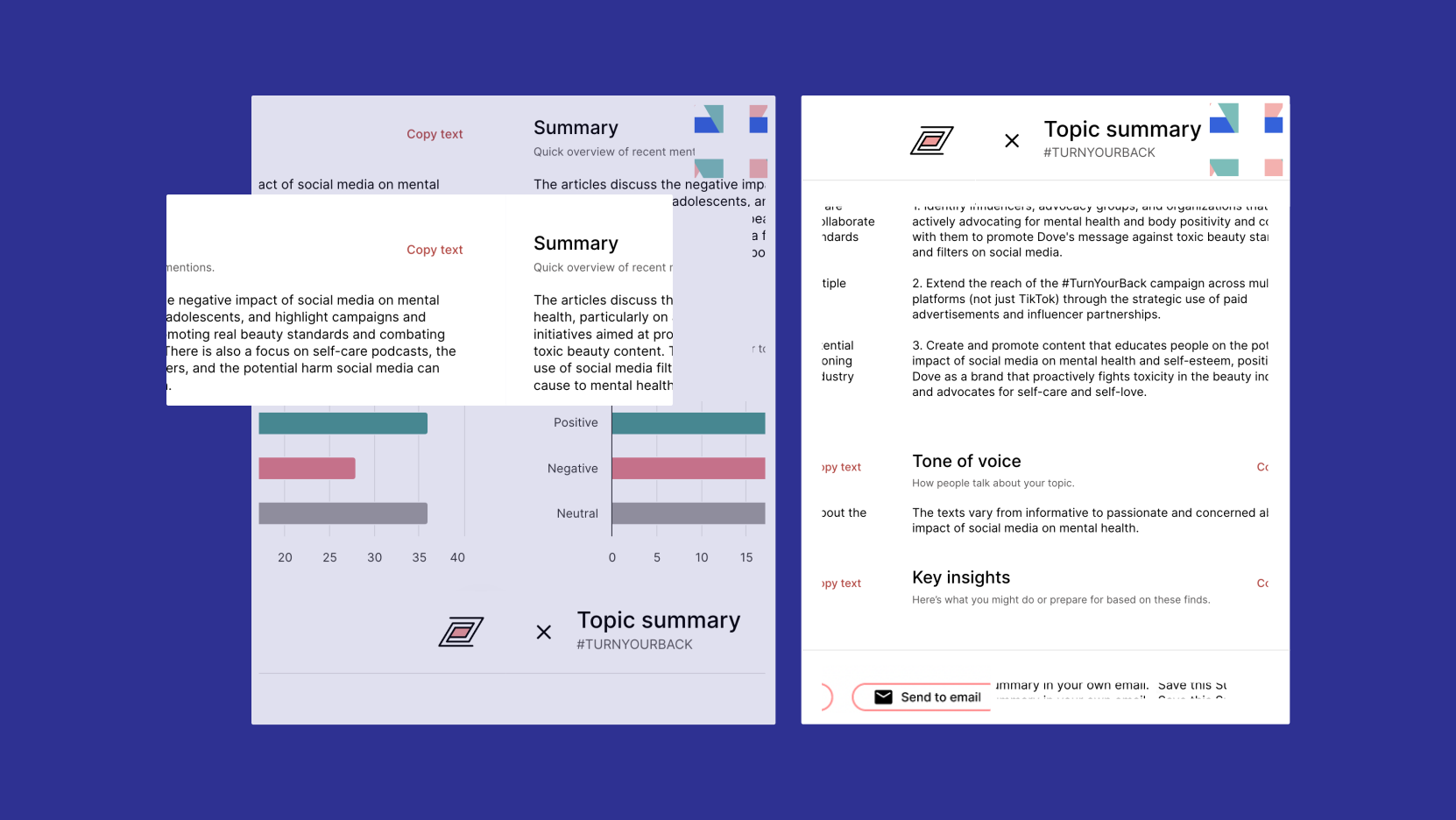
For example, during a product launch, these tools can track mentions across various platforms. This allows PR teams to gauge public perception instantly.
If you release a new product and it gains unexpected traction on social media, real-time monitoring can alert your PR team to capitalize on the positive buzz.
AI can also analyze the tone of mentions, categorizing them as positive, negative, or neutral. These tools can provide sentiment analysis for a campaign.
For example, let’s say your company faces a sudden wave of negative reviews due to a controversial advertisement. You can use sentiment analysis to quickly identify the extent and intensity of the backlash. This enables swift corrective measures.
How to Get Started
- Identify what you want to monitor (e.g., brand mentions, industry trends, competitors).
- Determine the platforms and sources you want to track (e.g., news articles, social media, blogs).
- Choose a media monitoring and sentiment analysis tool like Determ.
- Configure the solution with keywords related to your brand, products, industry, and competitors.
- Set up filters for specific languages, regions, and media types.
- Categorize mentions by sentiment (positive, negative, neutral).
- Generate reports and dashboards to visualize data trends.
- Adjust your PR strategies based on sentiment analysis insights.
2. Predictive Analytics
AI tools can analyze past data to predict future trends. For example, by analyzing previous holiday sales data, AI can forecast the types of PR content that might resonate the most during upcoming holidays. This helps your PR team plan proactive strategies.
You can also use AI to identify potential risks early. As a result, you can mitigate crises before they escalate. Media monitoring and sentiment analysis tools can detect early signs of a crisis by analyzing social media chatter and news reports.
Consider this example: Imagine one of your brand ambassadors is involved in a scandal. AI can alert your PR team early so that they can prepare a response before the situation gets worse.
How to Get Started
- Gather past PR data, sales figures, social media metrics, and other relevant data.
- Choose a predictive analytics tool like IBM Watson, Google Analytics, or RapidMiner.
- Input historical data into your chosen tool to train predictive models.
- Define key metrics and trends you want to predict (e.g., consumer behavior, market trends).
- Review AI-generated predictions and review emerging trends.
- Use those predictors to inform your PR strategies and content planning.
3. Content Creation & Curation
There are many AI writing tools available that can help you generate press releases, social media posts, headlines, interview questions, outlines, and other content. With Generative AI tools like ChatGPT from OpenAI, you can quickly create content and easily customize it to fit the needs and preferences of your target audience.
Generative AI can also create images and videos for social media, blog posts, articles, and more. This allows you to create engaging visuals in minutes.
For example, let’s say that you’re launching a solution that helps retailers deliver shoppers an omnichannel customer experience. You want to add an image to complement your press release announcing the new launch. But you don’t want to use a stock photo.
You can use an AI image generator like Microsoft Designer. Here’s an image the tool generated using a simple prompt like “create an image depicting omnichannel retail.”
Read 10 Digital PR Examples to Inspire Your Next Campaign

With a bit more customization, you could tweak the image to better fit your brand personality.
Besides content creation, AI can also streamline how you curate content. These tools can analyze audience preferences and recommend articles, blog posts, or social media content.
If you’re running a campaign about sustainability, you might not be up-to-date on the most popular trends and recent changes regarding the topic. AI can suggest articles on eco-friendly practices that align with the campaign’s message, which increases engagement with your audience.
How to Get Started
- Determine the types of content you need.
- Choose a generative AI tool like ChatGPT or Jasper to generate copy for articles, blogs, press releases, ads, and other content.
- Write prompts to help your chosen tool generate content that’s as relevant as possible to your target audience. Include key elements like topics, keywords, tone, style, and brand voice.
- Review and edit the AI-generated content to make sure it’s high-quality and aligns with your brand personality.
4. Audience Analysis & Segmentation
Your PR teams can leverage AI to analyze demographic, psychographic, and behavioral data to get deeper insights into your audience.
This helps you create detailed audience profiles. You can also more easily segment audiences based on demographics, online behavior, and purchase history.

AI also helps with precision targeting. This means you can use AI algorithms to identify the most relevant audience segments and determine the best channels and times to reach them.
By segmenting your audience, AI enables more personalized and targeted PR campaigns. That way, you can tailor messages to different audiences based on their preferences and behavior.
How to Get Started
- Collect data from CRM systems, social media analytics, website analytics, and surveys.
- Choose an AI-powered audience segmentation tool like Google Analytics, Adobe Audience Manager, or Salesforce Marketing Cloud.
- Use AI to segment your audience and identify trends in customer behavior.
- Create personalized PR campaigns for each audience segment.
- Tailor messaging, content, and channels to each audience segment.
5. Performance Measurement
AI tools allow you to track and analyze the performance of your PR campaigns in real time. You can get insights into engagement, reach, and sentiment.
For example, after you launch a new marketing campaign, AI can help you analyze which social media platforms are driving the most engagement and adjust your strategies accordingly.
Another valuable feature of AI solutions is that they can measure the ROI of your PR activities by correlating media exposure with business outcomes. Using these tools, you can track the impact of your PR efforts on sales and brand reputation.
How to Get Started
- Determine the key performance indicators (KPIs) for your PR campaigns (e.g., engagement, reach, conversions).
- Choose tools like Determ to analyze the impact of your communications and how your brand perception changes or compares to competitors over time.
- Generate reports and dashboards to visualize performance data.
- Implement changes based on what works and what doesn’t.
Determ uses AI to help you perform an in-depth analysis of your data in seconds. With Synthia AI, you get instant explanations for every spike and drop in sentiment. No more spending hours reading and interpreting a long list of mentions on your own.

Using AI Responsibly in PR
AI has its advantages, but it comes with many limitations, such as ethical issues and data privacy concerns.
Follow these best practices to ensure responsible AI use.
Implement It to Complement Your Current Tech Stack
Consider using AI tools that integrate seamlessly with your existing technology stack. For example, you can integrate content creation tools like Jasper with your content management system (CMS). This helps you avoid the pitfalls of siloed data and redundant systems.
Another example is integrating employee scheduling apps in PR. This streamlines operations and enhances productivity.
AI can automate repetitive PR tasks such as media monitoring, sentiment analysis, and content generation, while scheduling and time-tracking apps make sure your PR team efficiently allocates resources and optimizes their work hours.
This combination allows PR professionals to focus on strategic activities, respond to media inquiries promptly, and manage their workload effectively. This ultimately improves the overall efficiency and impact of your PR campaigns.
Train Your Team
Make sure your team understands how to effectively use AI tools and interpret AI-generated insights. They should also know how to spot biased data. This prevents misuse and ensures you’re using AI technologies to their full potential.
Maintain High-Quality Data
Ensure the data you use for AI applications is accurate, relevant, and up-to-date. Implement data quality measures and regular data audits. That way, your insights and predictions are accurate and reliable.
Commit to Ethics
Establish a set of ethical guidelines for how your company will use AI in your PR strategies. Cover aspects like fairness, transparency, and accountability.
The Future of PR: AI’s Potential
Ai is likely the future of PR. It won’t be replacing jobs any time soon. Instead, it will make jobs easier for PR professionals.
As a result, they can focus their tasks on what matters most: fostering meaningful relationships with their target audience and the media.
Sentiment analysis is one of the most important tasks PR teams have to tackle. Let Determ’s AI-powered features streamline your efforts. With Synthia AI, you can quickly gain smart, actionable insights that plan your next steps.
Try Determ today to elevate your media monitoring experience.
Author’s Bio Britney Steele, born and raised in Atlanta, is a freelance writer with 5+ years of experience. She has written for a variety of industries, including marketing, technology, business, finance, healthcare, wellness, and fitness. If she’s not spending her time chasing after three little humans and two four-legged friends, you can almost always find her glued to a book or awesome TV series.


